
What Is Jihad?
To understand Palestine, we must understand Islam, including militant strands

One of the most important moments in my life, growing up, was when I started to learn about what Hamas was, and what their ideology entailed.
One of the hardest pills for me to swallow was that the Palestinian struggle is something different to a simple civil rights issue, like apartheid-era South Africa, or parts of the USA under Jim Crow.
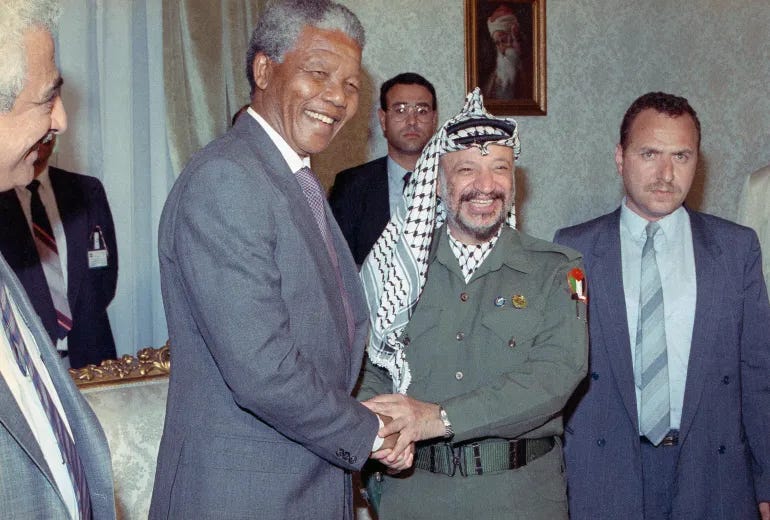
The big differentiator, in my eyes, is Islamic jihadism. This creates differences in both methods, as well as desired outcome.
I wrote about the history of Hamas and their precursors like Izz ad-Din al-Qassam, as well as the Egyptian Muslim Brotherhood, late last year.

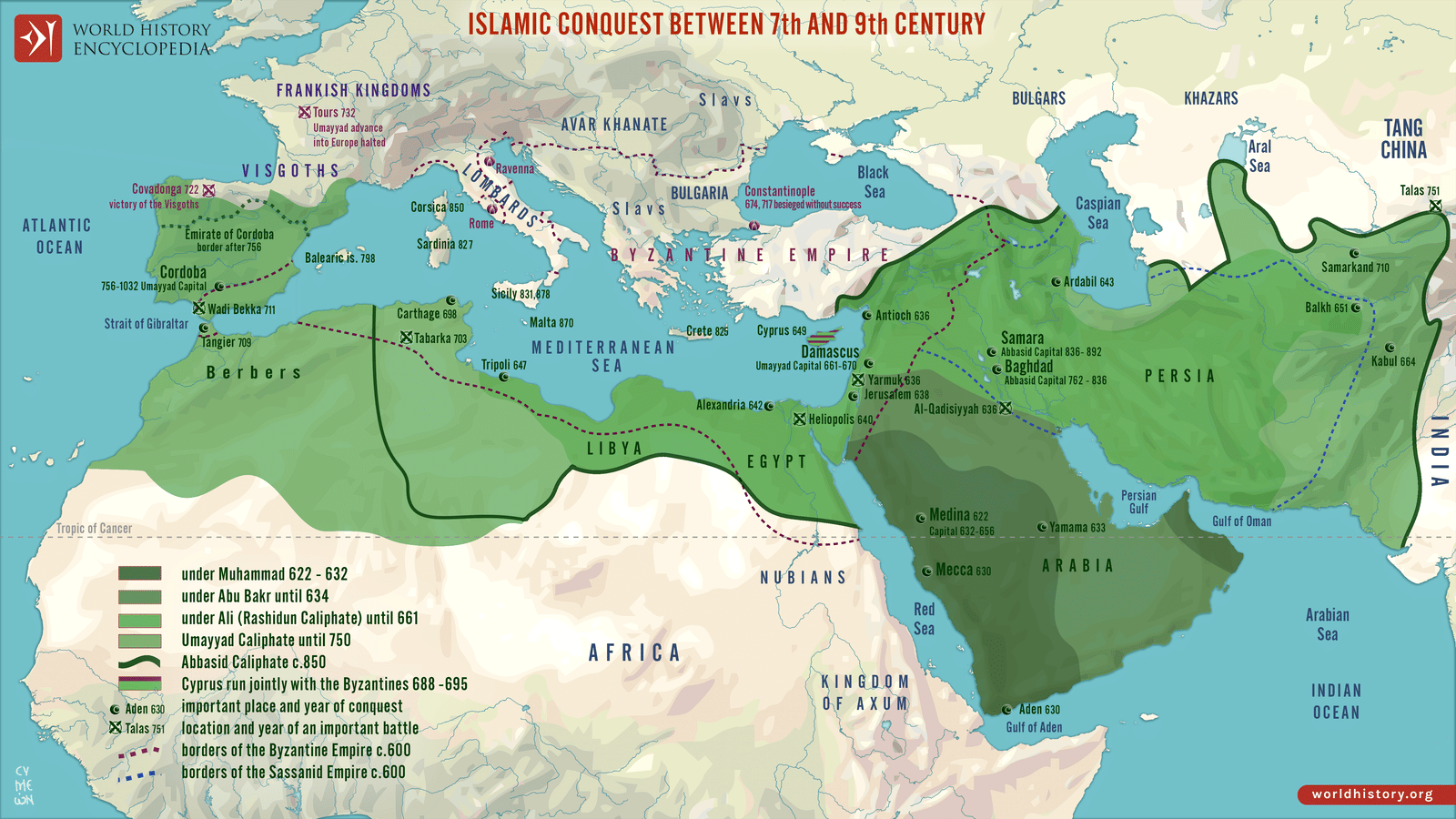
The goal of such groups is re-establishing Islamic control. Islamic control was the norm in Palestine for many centuries, starting from the Islamic conquests, in the 7th century. This was in place for over a thousand years in total, other than briefly being interrupted by the Christian crusaders during the mediaeval period.
Under such a vision, the land should be governed by Muslims, secured by Muslims, legislated for by Muslims, and defended by Muslims. Muslims should be on top. This means that any notion of Jewish sovereignty or self-determination over the land is treated as an illegitimate interruption of the natural order. It means that compromise over the land is understood as surrendering something that properly belongs to the Islamic world.
The prescribed method to achieve this is jihad: armed struggle, sacrifice, martyrdom, religious mobilisation, and the cultivation of a society prepared for permanent confrontation.
Jihad, of course, is how Islam won control of the land to begin with.
In the 630s, Arab Muslim armies moved out of Arabia and into the Byzantine provinces of the Levant. Palestine was then part of the Eastern Roman Empire, a Christian imperial order centred on Constantinople. Within a few years, Muslim forces had defeated the Byzantines at Yarmouk, taken control of Syria-Palestine, and entered Jerusalem.
In many ways, Islam originated as much an imperial order as it was a religion.
In Medina, Muhammad was preaching that he was a prophet of God, but he was also leading a political community. He settled disputes, made treaties, commanded men in battle, collected wealth, punished enemies, rewarded allies, governed relations between tribes, and decided who belonged inside or outside the community.
Islam began to organise public life.
It had rules about prayer and fasting, but also rules about inheritance, marriage, taxation, warfare, treaties, looting, punishment, loyalty, and obedience.
Jihad means, literally, “to struggle”, or “to strive”. Islamic tradition teaches of two jihads:
The greater jihad is the struggle within the self: the struggle against sin, temptation, cowardice, corruption, selfishness, and moral weakness. This is the language of personal discipline and spiritual purification.
The lesser jihad is armed struggle: fighting in the path of God against the enemies of the Muslim community.
In the world of early Islam, this led to an incredible and vast conquest, where Muslim armies fought for the expansion and supremacy of the Muslim community, and for the defeat of the unbelievers.
This approach has been absorbed into various doctrines of political Islam.
To be clear, when I am talking about political Islam, I am not talking about all Muslims, or anybody else other than those who believe in implementing Islam as a political system. There are more than a billion Muslims in the world, all of whom are individuals and many interpretive differences across Muslim society. We should absolutely not stigmatise all members of a religion.
But the end of the Caliphate in the early 20th century was a massive shock to the Islamic world, and to those Muslims worldwide who believed that Islamic rule is something preordained by God. The existence of a Jewish state in what was once the heart of a great Islamic empire was seen by as an offence against God, too. The rise of the Muslim Brotherhood—as well as their ideological descendants such as Hamas, ISIS, al-Qaeda, etc—is part of the response to this. It is all about trying to put Muslims back on top.
And this is why I find it so frustrating when I see naïve Western activists including many so-called “anti-Zionist Jews” or “anti-Zionist Israelis” advocating for some kind of egalitarian one state solution. Now, it’s not to say that I would be against some kind of egalitarian one state solution if such a thing could be successfully established and maintained. I want peace. I will support any kind of reasonable peace process which will lead to a sustainable and fair peace based on equal rights.
A one-state solution sounds, in Western activist language, like a neutral civic arrangement: one person, one vote, equal rights, shared institutions.
But in the actual political arena a single state means one shared arena for power. Whoever can organise, intimidate, mobilise, arm, win elections, dominate institutions, control streets, shape education, and define legitimacy will determine the character of that state.
The jihadists and advocates of political Islam do not want a secular, egalitarian outcome. At best, they would see it as a stepping stone. They will struggle to gain control over the whole thing, just as they did in Gaza when they overthrew Fatah and the Palestinian Authority.
That’s the difference between jihadist groups, and genuine civil rights movements.
A civil rights movement seeks equal status inside a shared political order. Jihadist movements seek control of the political order itself.
A civil rights movement seeks to redress and prevent inequality. Jihadist movement seek to establish Islamic supremacy.
This was a bitter pill for me to swallow. I see many people opposed to me also struggling to accept this.
Of course, there are supremacists on the Israeli side, too. This should go without saying. Any kind of Israeli ideology based on supremacy should also be rejected.
But if you do not understand what jihad is, you will end up feeling tremendously confused about these issues.
This is one of the clearest distinctions you’ve made: a civil-rights movement seeks equal status within a shared political order; a jihadist movement seeks domination over the political order itself. That distinction is absolutely essential, and much of the Western confusion around Israel/Palestine comes from refusing to see it.
What many activists call “liberation” is often treated as if it naturally means equality, coexistence, and shared civic life. But that is a Western projection. Some movements do not seek pluralism. They seek sovereignty, religious legitimacy, and the subordination of those whose national existence they regard as illegitimate.
That does not mean denying Palestinian suffering or flattening all Palestinians into Hamas. But it does mean taking Hamas’s own ideology seriously. If we translate jihadist politics into civil-rights language, we misunderstand both the conflict and the danger.
This is the hard thing many people still cannot say plainly: a movement can speak the language of liberation while seeking not equal citizenship, but domination.
Thank you for your clear writing and your perspective. I'm sideways with a few of my liberal friends over this issue. I refer often to your writing in these discussions.